
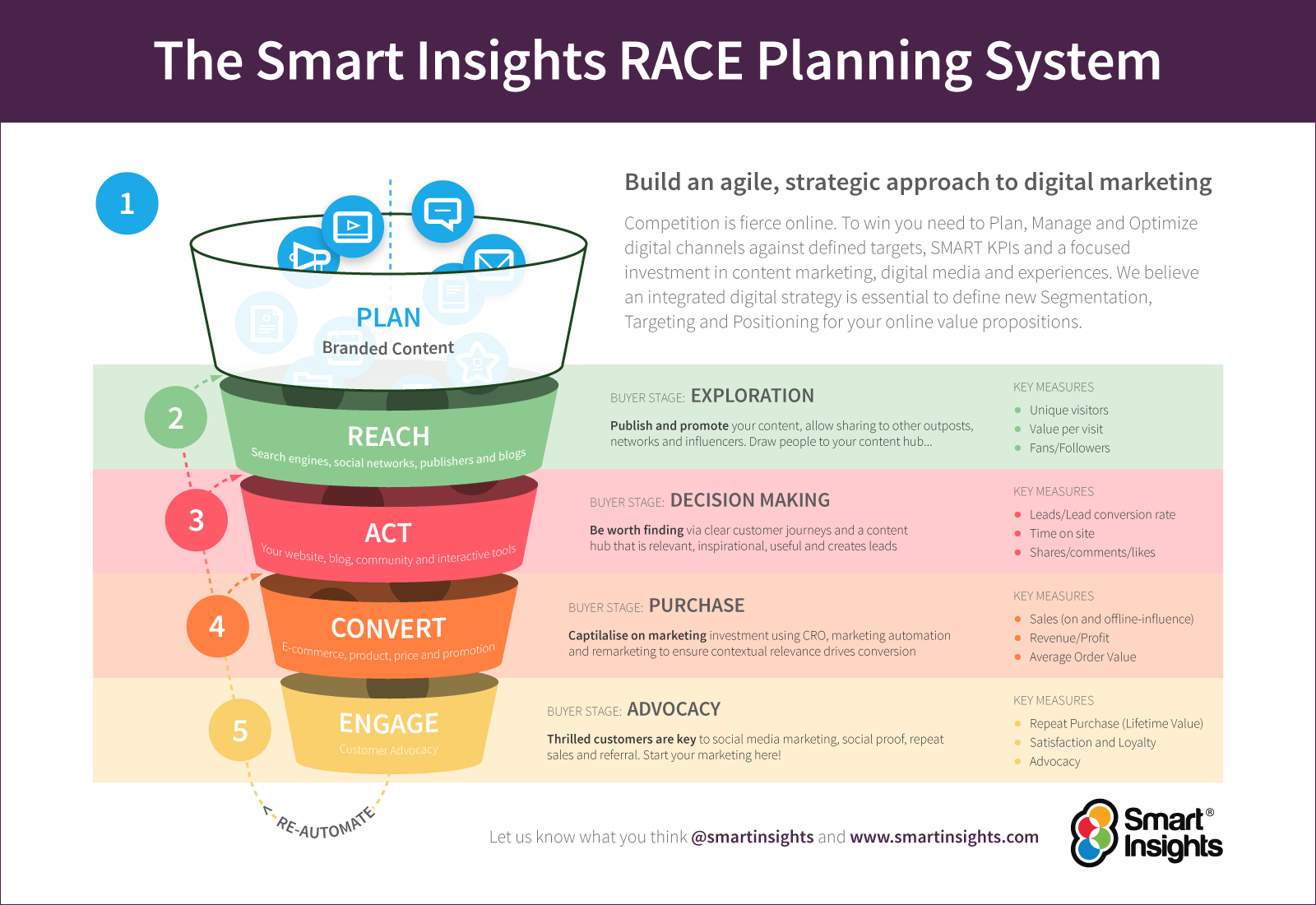
How to Build a Performance Marketing Strategy That Delivers
Performance marketing is built around a straightforward idea: invest in marketing activity, measure what it achieves and use the results to make better decisions. But a successful strategy is about more than tracking clicks or increasing advertising spend. It connects clear business goals with the right audiences, channels, creative and measurement methods.
Whether you are growing an online shop, generating leads or encouraging app downloads, a structured approach can help you understand which activity is working — and where to improve it.
What is performance marketing?
Performance marketing is an approach in which campaigns are planned and assessed against measurable outcomes. Depending on the business, those outcomes might include purchases, qualified leads, bookings, subscriptions or other valuable actions.
It commonly includes paid search, paid social, affiliate marketing, display advertising and other digital channels. These channels can be assessed using metrics such as cost per acquisition, return on advertising spend and conversion rate. The most useful measures depend on the objective: a campaign designed to build an audience should not necessarily be judged in the same way as one intended to drive immediate sales.
Start with a clear business objective
Before choosing platforms or setting budgets, decide what the business needs to achieve. “Get more traffic” is a starting point, but it does not explain whether that traffic is valuable. A stronger objective describes a meaningful result, such as increasing profitable online sales or generating a defined number of sales-qualified enquiries.
Set a target and a timeframe, then identify the actions that contribute to it. For example, an ecommerce business might track completed purchases, while a professional services firm may focus on qualified enquiries and the rate at which those enquiries become clients.
It is also important to agree on what counts as success with the people responsible for marketing, sales and finance. Shared definitions make reporting more useful and reduce the risk of optimising campaigns for outcomes that do not contribute to the wider business.
Understand your audience and the customer journey
Effective campaigns begin with a clear picture of the people they are intended to reach. Consider what your audience needs, what problems they are trying to solve, what influences their decisions and what might prevent them from taking action.
Look at customer research, website behaviour, search queries, sales conversations and feedback. These sources can reveal the language customers use and the questions they need answered. Use that insight to shape your messaging, targeting and landing pages.
Customers may interact with several channels before converting. Someone might first discover a business through social media, research it through search and return later by clicking an email link. A strategy should account for this journey rather than assuming every conversion comes from a single advert.
Choose channels for their role, not their popularity
There is no universally best performance marketing channel. The right mix depends on your audience, product, budget, purchase cycle and available creative. Each channel should have a clear role in the strategy.
- Paid search can help reach people actively looking for a product, service or solution.
- Paid social can introduce an offer to relevant audiences and support consideration with engaging creative.
- Affiliate marketing can extend reach through publishers and partners, with commission structures tied to agreed actions.
- Display and video advertising can support awareness and consideration, as well as retargeting where appropriate.
- Email marketing can help nurture existing subscribers and customers, subject to consent and applicable privacy rules.
Start with a manageable number of channels. Spreading a limited budget and team across too many platforms can make it difficult to gather enough information to learn what works.
Set budgets around value and learning
A performance marketing budget should reflect both the value of the desired outcome and the amount of evidence available. If you already know which campaigns generate profitable customers, you can allocate more confidently. If you are entering a new channel or audience, reserve a sensible test budget and define in advance what you need to learn.
Consider the full economics of a conversion. A low cost per lead is not necessarily good value if those leads rarely become customers. Likewise, a campaign with a higher acquisition cost may still be worthwhile if it attracts customers who spend more or remain loyal for longer.
Where possible, compare campaign performance with contribution margin, customer lifetime value and the time it takes to recover acquisition costs. This gives a more complete view than looking at advertising revenue alone.
Create a strong path from advert to action
Even well-targeted campaigns can struggle if the experience after the click is confusing or slow. Make sure the advert, landing page and offer tell a consistent story. The page should quickly explain what is being offered, who it is for and what the visitor should do next.
Review the user experience on mobile as well as desktop. Check page speed, navigation, form length, payment options and the clarity of calls to action. Remove unnecessary friction, but do not ask for less information if it prevents your team from assessing whether an enquiry is suitable.
Trust also matters. Clear pricing, useful product information, customer reviews and straightforward contact details can help visitors feel confident about taking the next step.
Measure outcomes with care
Reliable measurement is the foundation of an effective strategy. Set up analytics and conversion tracking before launching campaigns, then check that important actions are recorded accurately. Where possible, connect marketing data with customer relationship management or sales data so you can understand what happens after a form is submitted or a purchase is made.
Useful performance measures may include:
- Conversion rate: the proportion of visitors who complete a chosen action.
- Cost per acquisition (CPA): the cost of acquiring a customer or other defined conversion.
- Return on advertising spend (ROAS): the revenue attributed to advertising compared with the advertising cost.
- Customer acquisition cost (CAC): the broader cost of acquiring a customer, which may include more than media spend.
- Lead quality: how closely leads match the business’s target customer and how likely they are to become customers.
- Incrementality: whether marketing activity generated results that would not otherwise have happened.
Attribution reports can help describe customer journeys, but they do not always prove that a channel caused a conversion. Use more than one source of evidence where possible, and be cautious when comparing figures measured in different ways.
Test, learn and optimise
Ongoing optimisation is not simply a matter of changing bids or pausing adverts with a weak week of results. Build a testing plan that focuses on meaningful questions. You might test different value propositions, audience groups, creative formats or landing-page layouts.
Change one major variable at a time where practical, give tests enough time and data to produce useful evidence, and document what you learn. Avoid declaring a winner based on very small samples or short-term fluctuations. Results can be affected by seasonality, competition, changes in demand and other factors outside a campaign’s control.
Use the findings to make specific decisions: increase investment in a proven audience, revise an underperforming message or investigate why a channel brings traffic but few qualified conversions. Optimisation works best as a continuous cycle of planning, testing, learning and refinement.
Protect customer trust and data
Performance goals should not come at the expense of responsible marketing. Be transparent about offers, use customer data appropriately and make sure tracking and consent practices meet relevant legal requirements. In the UK, businesses should take account of data protection and privacy rules, including requirements that may apply to cookies and similar technologies.
Good practice also means avoiding misleading claims, respecting marketing preferences and ensuring that advertising is appropriate for the audience. Trust is a long-term asset, not just a compliance consideration.
Common performance marketing mistakes
- Focusing on clicks rather than business results. Traffic is useful only when it contributes to an objective.
- Scaling too quickly. A campaign that works at a small spend may not perform the same way at a much larger scale.
- Ignoring lead or customer quality. Low-cost conversions can be poor value if they do not become revenue.
- Making too many changes at once. This makes it harder to understand what caused a change in performance.
- Overlooking the landing page. Campaign performance depends on the whole journey, not just the advert.
- Treating platform reporting as the complete picture. Combine it with business data and other measurement approaches.
A practical starting framework
- Choose one clear business outcome and define how it will be measured.
- Describe the priority audience and the problem your offer solves.
- Select a small number of channels that match the audience and objective.
- Set up tracking and confirm that conversions are recorded correctly.
- Create a budget for both established activity and controlled testing.
- Make sure the advert and landing page provide a clear, consistent experience.
- Review results regularly, including lead quality and commercial value.
- Record what you learn and use it to guide the next round of investment.
Build for sustainable growth
A strong performance marketing strategy balances accountability with curiosity. Clear objectives and reliable measurement help show what is happening; thoughtful testing helps explain why. By connecting campaign data with customer and business outcomes, organisations can make better decisions about where to invest and how to improve.
The best strategy is not necessarily the one with the most channels or the biggest budget. It is the one that consistently reaches the right people, gives them a useful reason to act and turns what is learned into better marketing over time.
Essential FAQs on Crafting an Effective Performance Marketing Strategy
- What is a performance marketing strategy?
- How do you create a performance marketing strategy?
- Which channels should a performance marketing strategy include?
- How do you set goals for a performance marketing campaign?
- Which metrics should you use to measure performance marketing?
- How do you calculate return on advertising spend (ROAS)?
- How much should you budget for performance marketing?
- How can you improve performance marketing campaign results?
- How long does it take to see results from performance marketing?
What is a performance marketing strategy?
A performance marketing strategy is a plan for using marketing channels and budget to achieve measurable business outcomes, such as sales, leads or sign-ups. It sets clear goals, identifies the audiences to reach, chooses suitable channels and defines how results will be tracked. Campaign performance is then reviewed and optimised over time, so investment can be focused on the activity that delivers the most value.
How do you create a performance marketing strategy?
To create a performance marketing strategy, start by defining a clear business goal, such as generating qualified leads or increasing profitable sales, and decide how success will be measured. Identify your target audience and understand their needs and journey, then choose the channels most likely to reach them. Set a realistic budget, ensure conversion tracking is in place, and create relevant adverts and landing pages with a clear call to action. Once campaigns are live, review results against meaningful metrics, test different approaches and use what you learn to refine your activity and investment.
Which channels should a performance marketing strategy include?
A performance marketing strategy should include the channels best suited to your objectives, audience and budget, rather than relying on a fixed list. Common options include paid search to reach people actively looking for a solution, paid social to build awareness and drive conversions, and affiliate marketing to extend reach through partners. Display and video can support awareness or retargeting, while email can help nurture existing subscribers and customers. Choose channels for a clear purpose, track their contribution to meaningful business outcomes and adjust the mix as you learn what works.
How do you set goals for a performance marketing campaign?
Set goals for a performance marketing campaign by starting with a clear business outcome, such as increasing profitable sales, generating qualified leads or growing subscriptions. Make the goal specific and time-bound, then choose measurable KPIs that reflect its value—for example, cost per acquisition, conversion rate or return on advertising spend. Set realistic targets using historical performance, budget and customer value, and make sure tracking is in place before the campaign launches. Review results regularly, including the quality of leads or customers, and adjust the targets or activity as you learn what works.
Which metrics should you use to measure performance marketing?
The right metrics depend on your campaign objectives, but performance marketing is usually assessed using a combination of results and costs. Key measures include conversion rate, cost per acquisition (CPA), customer acquisition cost (CAC) and return on advertising spend (ROAS). For lead-generation campaigns, track lead quality and how many leads become customers; for ecommerce, consider revenue, average order value and profit margin as well as sales. It is also useful to assess customer lifetime value and incrementality to understand long-term value and whether campaigns are generating additional results. Choose metrics that reflect business outcomes, rather than relying on clicks or impressions alone.
How do you calculate return on advertising spend (ROAS)?
Return on advertising spend (ROAS) is calculated by dividing the revenue attributed to an advertising campaign by the amount spent on that advertising. For example, if a campaign generates £5,000 in attributed revenue from £1,000 of ad spend, its ROAS is 5:1, or 500%. ROAS measures revenue, not profit, so it does not account for costs such as product, fulfilment or agency fees; results also depend on how conversions are attributed to the campaign.
How much should you budget for performance marketing?
There’s no single budget that suits every business; the right amount depends on your goals, profit margins, audience and chosen channels. Start by working out what you can afford to pay for a customer or qualified lead, based on its likely value, then set aside enough to gather meaningful results without putting cash flow at risk. If you’re testing a new channel, begin with a controlled budget, measure performance and lead quality, and increase investment gradually when the results support it.
How can you improve performance marketing campaign results?
Improve performance marketing results by setting clear objectives and tracking meaningful outcomes, such as qualified leads, sales and customer acquisition cost—not just clicks. Use campaign data to identify which audiences, channels and messages deliver the greatest value, then test changes to targeting, creative and landing pages in a controlled way. Make sure the post-click experience is relevant and easy to use, especially on mobile, and review performance regularly so budgets can be shifted towards effective activity. Allow tests enough time and data to produce reliable insights, and consider lead quality and long-term customer value when deciding what to scale.
How long does it take to see results from performance marketing?
The time it takes to see results from performance marketing depends on the channel, budget, audience and conversion cycle. Paid search or social campaigns may generate clicks and enquiries within days, but it can take several weeks or longer to gather enough reliable data to judge performance and optimise effectively. For considered purchases or longer sales cycles, meaningful results may take months. Set clear milestones, allow time for testing and assess not only early activity, but also conversion quality and business impact.