
The Importance of On-Page Optimization in SEO
When it comes to search engine optimization (SEO), on-page optimization plays a crucial role in determining the visibility and ranking of a website on search engine results pages. On-page optimization refers to the practice of optimizing individual web pages to improve their relevance to specific keywords and phrases, ultimately making them more search engine-friendly.
Key Elements of On-Page Optimization
There are several key elements that contribute to effective on-page optimization:
- Title Tags: Title tags are one of the most important on-page SEO elements. They should accurately describe the content of a web page using relevant keywords.
- Meta Descriptions: Meta descriptions provide a brief summary of a web page’s content. They should be compelling, concise, and include relevant keywords.
- Headings: Proper use of headings (H1, H2, H3, etc.) helps structure content for both users and search engines. Keywords should be strategically incorporated into headings.
- URL Structure: Clean and descriptive URLs that contain relevant keywords can improve both user experience and SEO performance.
- Content Quality: High-quality, relevant content that is well-structured and engaging is essential for on-page optimization. Content should be tailored to target specific keywords without keyword stuffing.
- Internal Linking: Internal links help search engines navigate a website and establish hierarchy. They also distribute link equity throughout the site.
- Image Optimization: Optimizing images with descriptive filenames, alt text, and captions can improve accessibility and enhance SEO performance.
The Benefits of On-Page Optimization
Effective on-page optimization offers numerous benefits, including:
- Improved Search Engine Rankings: By optimising key on-page elements, websites can increase their visibility in search engine results pages (SERPs) for relevant queries.
- Better User Experience: Well-optimized web pages are easier to navigate, load faster, and provide valuable information to users, enhancing overall user experience.
- Increase in Organic Traffic: Higher search engine rankings resulting from on-page optimization efforts can lead to increased organic traffic from users actively searching for related topics or products/services.
- Higher Conversion Rates: When users find what they are looking for easily due to effective on-page optimization, it can lead to higher conversion rates and improved business outcomes.
In conclusion, on-page optimization is a fundamental aspect of SEO that directly impacts a website’s visibility, user experience, and overall performance in search engine results. By focusing on key elements such as title tags, meta descriptions, content quality, and internal linking strategies, website owners can enhance their online presence and drive meaningful results through organic search traffic.
Understanding On-Page Optimisation: Key Tactics, Differences, and Essential Components
- What are the on page optimization tactics?
- What is the major difference between on-page and off-page optimization?
- What is on page optimization in search engine optimization?
- What are on page and off-page optimization?
- What are examples of on page optimization factors?
- What is on page Optimisation in SEO?
- What are the 3 primary components of on page optimization?
What are the on page optimization tactics?
When it comes to on-page optimization tactics, there are several key strategies that can significantly impact a website’s SEO performance. These tactics include optimising title tags and meta descriptions with relevant keywords, structuring content with appropriate headings, creating clean and descriptive URL structures, ensuring high-quality and engaging content, implementing internal linking to establish site hierarchy, and optimising images for improved accessibility and SEO benefits. By employing these on-page optimization tactics effectively, website owners can enhance their search engine visibility, user experience, and overall organic traffic growth.
What is the major difference between on-page and off-page optimization?
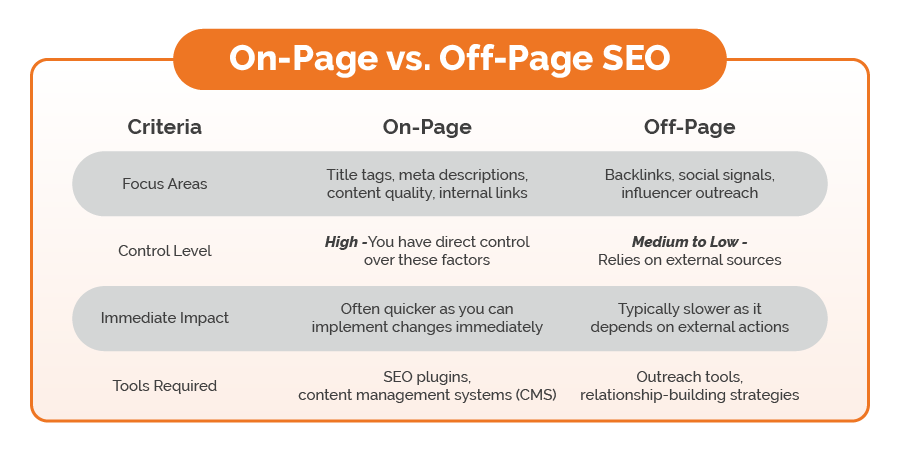
The major difference between on-page and off-page optimization lies in the focus of their respective strategies. On-page optimization primarily involves optimizing individual web pages by fine-tuning elements such as meta tags, content quality, URL structure, and internal linking to make them more search engine-friendly. In contrast, off-page optimization focuses on external factors like backlinks, social signals, and online reputation management to improve a website’s authority and credibility in the eyes of search engines. While on-page optimization is about enhancing the content and structure of a website itself, off-page optimization revolves around building relationships and establishing a strong online presence beyond the website’s boundaries. Both aspects are essential for a comprehensive SEO strategy that aims to boost a site’s visibility and rankings in search engine results pages.
What is on page optimization in search engine optimization?
On-page optimization in search engine optimization (SEO) refers to the practice of strategically enhancing individual web pages to improve their visibility and relevance in search engine results. It involves optimising various on-page elements such as title tags, meta descriptions, headings, content quality, URL structure, internal linking, and image optimisation. By focusing on these key elements, website owners aim to make their pages more search engine-friendly and increase their chances of ranking higher for specific keywords or phrases. Effective on-page optimization is essential for improving organic search traffic, enhancing user experience, and ultimately achieving better search engine rankings.
What are on page and off-page optimization?
On-page and off-page optimization are two essential components of search engine optimization (SEO) that work together to improve a website’s visibility and ranking on search engine results pages. On-page optimization involves optimizing individual web pages by focusing on elements such as title tags, meta descriptions, content quality, and internal linking. It aims to make the content more relevant to specific keywords and user-friendly for both search engines and visitors. In contrast, off-page optimization refers to activities conducted outside the website, such as link building and social media marketing, to enhance the site’s authority, credibility, and reputation in the eyes of search engines. Both on-page and off-page optimization are crucial for a comprehensive SEO strategy that drives organic traffic and improves overall online presence.
What are examples of on page optimization factors?
Examples of on-page optimization factors include title tags, meta descriptions, headings, URL structure, content quality, internal linking, and image optimization. Title tags play a crucial role in describing the content of a web page using relevant keywords. Meta descriptions provide a brief summary of the page’s content for search engine users. Headings help structure content and incorporate keywords effectively. URL structure should be clean and descriptive with relevant keywords. Quality content that is engaging and tailored to specific keywords is essential. Internal linking aids in website navigation and hierarchy establishment. Image optimization involves using descriptive filenames, alt text, and captions to enhance accessibility and SEO performance. By focusing on these factors, websites can improve their search engine visibility and user experience significantly.
What is on page Optimisation in SEO?
On-page optimization in SEO refers to the practice of fine-tuning individual web pages to enhance their visibility and relevance for specific keywords or phrases in search engine results. It involves strategically optimizing various on-page elements such as title tags, meta descriptions, headings, content quality, URL structure, internal linking, and image optimization to improve a website’s search engine rankings. By focusing on on-page optimization, website owners can make their content more search engine-friendly and user-friendly, ultimately driving organic traffic and improving the overall performance of their website in search results.
What are the 3 primary components of on page optimization?
When it comes to on-page optimization, there are three primary components that play a crucial role in enhancing a website’s search engine visibility and performance. These components include title tags, meta descriptions, and high-quality content. Title tags serve as concise descriptions of a web page’s content, incorporating relevant keywords to signal its relevance to search engines. Meta descriptions provide brief summaries that entice users to click through to the page from search results. Lastly, high-quality content that is informative, engaging, and optimised for specific keywords is essential for on-page SEO success. By focusing on these key components, website owners can improve their chances of ranking higher in search engine results pages and attracting organic traffic.