
Digital Marketing and Google Garage: A Practical Guide for Beginners
Learning digital marketing can feel daunting when the industry is full of new tools, unfamiliar terms and changing trends. Google Digital Garage has helped make the subject more approachable by offering online learning resources designed to build practical digital skills.
Whether you run a small business, are considering a career in marketing or simply want to understand how online promotion works, Google’s training can be a useful place to start. Here’s what to know about Google Digital Garage and how to make the most of its digital marketing resources.
What is Google Digital Garage?
Google Digital Garage is the name associated with Google’s online training and skills-development programmes. Its courses have covered subjects such as digital marketing, online business, data and technology. Course availability, names and certification options can change, so check Google’s current learning platforms for the latest information.
One of its best-known offerings has been a course covering the fundamentals of digital marketing. It introduces key concepts in plain language and is intended to help learners understand how businesses can reach and engage people online.
What can you learn about digital marketing?
Digital marketing includes a range of methods for promoting a business, product or service online. Google’s introductory learning resources have covered topics such as:
- Search engine optimisation (SEO): improving a website so that people can find it through unpaid search results.
- Search advertising: using paid adverts to reach people searching for particular products or services.
- Social media: choosing platforms, creating content and building relationships with an online audience.
- Content marketing: publishing useful material that attracts and informs potential customers.
- Email marketing: communicating with subscribers and customers through relevant, permission-based emails.
- Analytics: using data to understand website activity and assess how marketing is performing.
- Online strategy: setting goals and selecting suitable channels to support a business.
The precise subjects and course structure may vary, but these foundations can help learners see how different parts of digital marketing fit together.
Who might benefit from Google’s training?
Beginner-friendly online courses can be useful for small-business owners who want to promote their services, students exploring marketing, jobseekers developing their skills and professionals looking to refresh their knowledge. They can also help people who work with digital agencies understand the language and basic principles behind a campaign.
Because the material is online, learners can often study at a pace that suits them. This flexibility makes it easier to fit learning around work or other commitments, although access and course features depend on the programme currently available.
How to get more from a digital marketing course
Watching lessons or completing quizzes is a good start, but digital marketing becomes clearer when you apply what you learn. Try these steps:
- Set a clear goal. Decide whether you want to attract more website visitors, generate enquiries, increase sales or build a particular skill.
- Practise with a real example. Use your own website, a personal project or a fictional business to apply each concept.
- Keep notes of unfamiliar terms. Build a glossary as you go, especially for topics such as keywords, conversions and analytics.
- Measure results. Choose a small number of relevant measures, such as enquiries or email sign-ups, rather than focusing only on likes or page views.
- Continue learning. Search engines, social platforms and advertising tools change, so revisit your knowledge and check current guidance.
What a Google course can’t do on its own
An introductory course can provide structure and useful background, but it cannot guarantee a job, a marketing result or a recognised qualification in every context. Employers and clients may also look for practical experience, communication skills and examples of work.
Digital marketing is not a set of tricks that works identically for every business. A strategy that suits a local café may not suit a national online retailer. Testing, audience research and a clear understanding of business goals are essential.
It is also worth checking the details of any course before enrolling. Confirm whether it is free, how long it takes, whether it includes an assessment and what type of certificate, if any, is available. Course terms and recognition can change over time.
Is Google Digital Garage worth exploring?
For anyone new to online promotion, Google Digital Garage and related Google learning resources can offer an accessible introduction to digital marketing. They can help you understand core channels, develop a shared vocabulary and decide which areas you would like to explore further.
The best results come from combining structured learning with hands-on practice. Start with the fundamentals, apply them to a real goal and keep refining your approach as you learn more about your audience.
Frequently Asked Questions About Google Digital Garage’s Digital Marketing Course
- What is Google Digital Garage’s digital marketing course?
- Is Google Digital Garage’s digital marketing course free?
- How do I enrol in a Google Digital Garage digital marketing course?
- Is Google Digital Garage suitable for beginners in digital marketing?
- What topics does Google Digital Garage’s digital marketing training cover?
- How long does it take to complete Google’s digital marketing training?
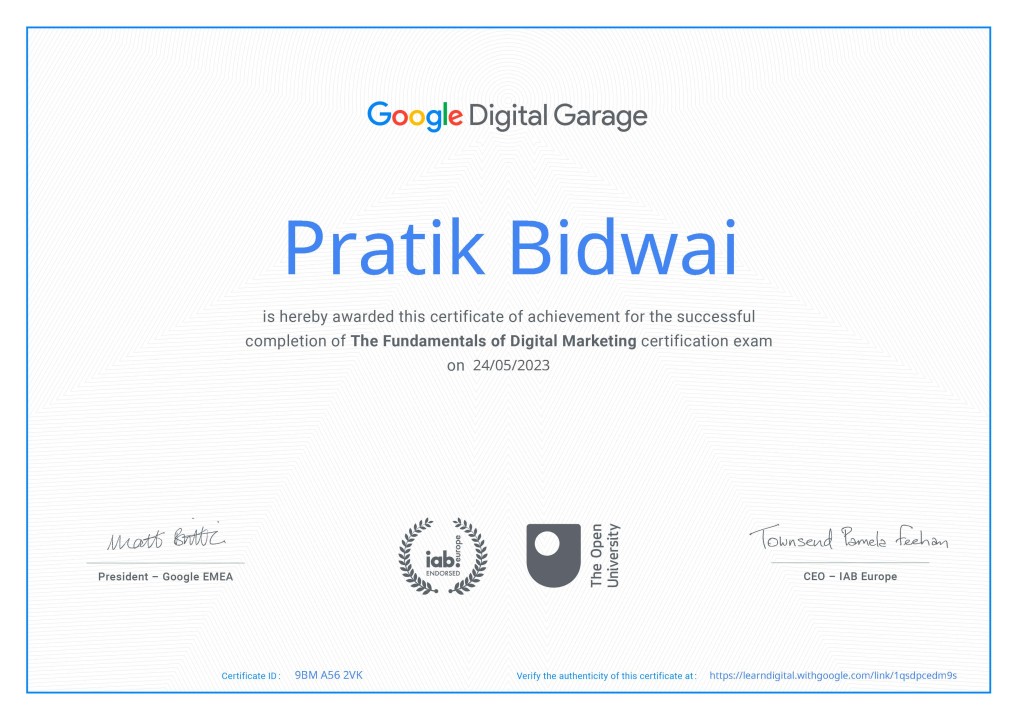
- Can I earn a certificate after completing a Google digital marketing course?
- Is a Google Digital Garage certificate recognised by employers in the UK?
- Can Google Digital Garage training help me get a job in digital marketing?
What is Google Digital Garage’s digital marketing course?
Google Digital Garage’s digital marketing course is an online introduction to the core principles of promoting a business on the internet. It has covered topics such as search engine optimisation, online advertising, social media, email marketing and analytics, helping learners understand how different channels can work together. Course content, availability and certification may change, so check Google’s current learning platform for the latest details.
Is Google Digital Garage’s digital marketing course free?
Yes, Google’s Fundamentals of Digital Marketing course has traditionally been available free of charge, including its learning materials and assessment. Course availability and features can change, so check Google’s current learning platform for the latest details, including whether a certificate is offered.
How do I enrol in a Google Digital Garage digital marketing course?
To enrol, visit Google’s official digital marketing learning page and choose the course you’re interested in. Sign in with a Google Account if prompted, then follow the on-screen instructions to start learning. Course availability and enrolment steps can change, so check Google’s current course information for the latest details.
Is Google Digital Garage suitable for beginners in digital marketing?
Yes, Google Digital Garage is suitable for beginners who want an introduction to digital marketing. Its learning resources explain key topics—such as SEO, online advertising, social media and analytics—in an accessible way, often allowing you to study at your own pace. Course content and availability can change, so check Google’s current learning platform for details. To build confidence, try applying each lesson to a real project or small business.
What topics does Google Digital Garage’s digital marketing training cover?
Google Digital Garage’s digital marketing training covers a range of core topics, including search engine optimisation (SEO), search advertising, social media, content and email marketing, website strategy and analytics. It introduces learners to ways of reaching online audiences, improving a website’s visibility and measuring marketing performance. Course content can change over time, so check Google’s current learning platform for the latest syllabus.
How long does it take to complete Google’s digital marketing training?
The time needed depends on the course and how quickly you work through it. Google’s well-known Fundamentals of Digital Marketing course has typically been listed as around 40 hours of learning, but it is self-paced, so you can spread it over several days or weeks. Check the course page for the latest duration and details, as Google’s training offerings can change.
Can I earn a certificate after completing a Google digital marketing course?
Yes, some Google digital marketing courses offer a certificate when you complete the required lessons and assessments. The certificate type and eligibility requirements can vary between courses, and availability may change, so check the course details before enrolling. Keep in mind that a certificate can demonstrate your learning, but it does not guarantee a job or professional accreditation.
Is a Google Digital Garage certificate recognised by employers in the UK?
A Google Digital Garage certificate can be a useful addition to a CV in the UK, particularly for entry-level roles, as it shows initiative and familiarity with digital marketing fundamentals. However, it is not a formal qualification and recognition varies between employers; it is usually best treated as evidence of introductory learning rather than a substitute for practical experience, relevant results or a portfolio. Check the details of the specific course and certificate, as courses and accreditation can change.
Can Google Digital Garage training help me get a job in digital marketing?
Google Digital Garage training can help you build a foundation in digital marketing and demonstrate your willingness to learn, which may strengthen a job application—particularly for entry-level roles. However, completing a course does not guarantee employment. Employers may also look for practical experience, communication skills and evidence of your work, so try applying what you learn to a personal project, volunteering or a small business, and check that the course and any certificate are currently available and relevant to the roles you’re targeting.