
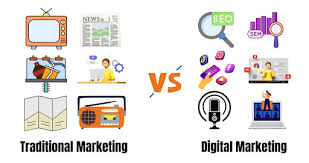
The Evolution of Marketing: Traditional vs. Digital
In the ever-changing landscape of marketing, two distinct approaches have emerged as key players: traditional marketing and digital marketing. While both aim to promote products or services to target audiences, they differ significantly in their strategies and channels.
Traditional Marketing
Traditional marketing encompasses conventional methods such as print advertisements, television commercials, radio spots, billboards, and direct mail. These tactics have been prevalent for decades and are known for their broad reach and ability to create brand awareness among mass audiences.
One of the strengths of traditional marketing is its tangible nature – customers can physically interact with print ads or see commercials on TV. This can create a lasting impression and build trust with consumers over time.
Digital Marketing
Digital marketing leverages online platforms and technologies to reach target audiences through channels such as social media, search engines, email campaigns, and websites. This approach offers precise targeting capabilities, allowing marketers to tailor their messages to specific demographics or interests.
Furthermore, digital marketing provides real-time data analytics that enable marketers to track performance metrics such as website traffic, conversion rates, and customer engagement. This data-driven approach allows for quick adjustments and optimisation of campaigns for better results.
The Future of Marketing
As technology continues to advance rapidly, the line between traditional and digital marketing is becoming increasingly blurred. Many successful campaigns now incorporate elements of both approaches to maximise their impact and reach a diverse audience across various touchpoints.
Ultimately, the key to effective marketing lies in understanding your target audience’s preferences and behaviours and selecting the most appropriate mix of traditional and digital strategies to engage them effectively.
Exploring Traditional vs Digital Marketing: Key Differences, Cost-Effectiveness, Integration Strategies, Advantages, Measuring Success, and Technological Influence
- What is the difference between traditional marketing and digital marketing?
- Which is more cost-effective
- How can traditional marketing tactics be integrated with digital marketing strategies?
- What are the key advantages of traditional marketing over digital marketing?
- How can businesses measure the effectiveness of their digital marketing campaigns?
- In what ways has technology influenced the shift from traditional to digital marketing?
What is the difference between traditional marketing and digital marketing?
One of the frequently asked questions in the realm of marketing is, “What is the difference between traditional marketing and digital marketing?” Traditional marketing involves conventional methods like print ads, TV commercials, and billboards to reach a broad audience physically. On the other hand, digital marketing utilises online platforms such as social media, search engines, and email campaigns to target specific demographics with data-driven precision. While traditional marketing focuses on tangible interactions and brand awareness, digital marketing offers real-time analytics for tracking performance and customising messages. Understanding these distinctions can help businesses choose the right mix of strategies to effectively engage their target audience in today’s dynamic marketing landscape.
Which is more cost-effective
When comparing the cost-effectiveness of traditional and digital marketing, the answer often depends on various factors such as the target audience, campaign objectives, and budget constraints. Traditional marketing methods like print ads or TV commercials may have higher upfront costs but can reach a broad audience effectively. On the other hand, digital marketing offers more precise targeting options and real-time performance tracking, which can lead to a higher return on investment in terms of reaching the right audience at the right time. Ultimately, determining which approach is more cost-effective requires a strategic evaluation of your specific marketing goals and resources to make an informed decision that aligns with your overall marketing strategy.
How can traditional marketing tactics be integrated with digital marketing strategies?
To effectively integrate traditional marketing tactics with digital marketing strategies, businesses can leverage a multi-channel approach that combines the strengths of both methods. For instance, using QR codes on printed materials like flyers or brochures can drive traffic to digital platforms, where customers can engage further with the brand online. Additionally, incorporating social media promotions alongside traditional advertising campaigns can enhance reach and engagement by tapping into the vast online audience. By aligning messaging and branding across various channels and tracking performance metrics comprehensively, businesses can create a seamless and cohesive marketing strategy that maximises impact and ROI.
What are the key advantages of traditional marketing over digital marketing?
When exploring the key advantages of traditional marketing over digital marketing, one notable aspect is the tangible nature of traditional methods. Print advertisements, television commercials, or direct mail campaigns offer a physical presence that can leave a lasting impression on consumers. Additionally, traditional marketing has historically excelled in reaching mass audiences through channels like billboards or radio spots, providing broad visibility and brand awareness. These traditional approaches often evoke a sense of familiarity and trust among consumers due to their longstanding presence in the marketing landscape.
How can businesses measure the effectiveness of their digital marketing campaigns?
To evaluate the success of their digital marketing campaigns, businesses can employ various metrics and tools to measure effectiveness. Key performance indicators (KPIs) such as website traffic, conversion rates, click-through rates, and return on investment (ROI) can provide valuable insights into the campaign’s impact. Utilising analytics platforms like Google Analytics or social media insights can help track user behaviour, engagement levels, and campaign performance in real time. By setting clear objectives, monitoring relevant metrics, and analysing data trends, businesses can assess the effectiveness of their digital marketing efforts and make informed decisions to optimise future strategies for greater success.
In what ways has technology influenced the shift from traditional to digital marketing?
Technology has played a pivotal role in reshaping the marketing landscape, driving the transition from traditional to digital strategies. The advent of digital platforms and tools has revolutionised how businesses connect with their target audiences, offering unprecedented levels of precision and personalisation. From data analytics that provide valuable insights into consumer behaviour to social media platforms that enable direct engagement with customers, technology has empowered marketers to deliver more targeted and impactful campaigns than ever before. As consumers increasingly turn to online channels for information and entertainment, businesses have had to adapt their marketing approaches to meet these changing preferences, leading to a significant shift towards digital marketing methods.