
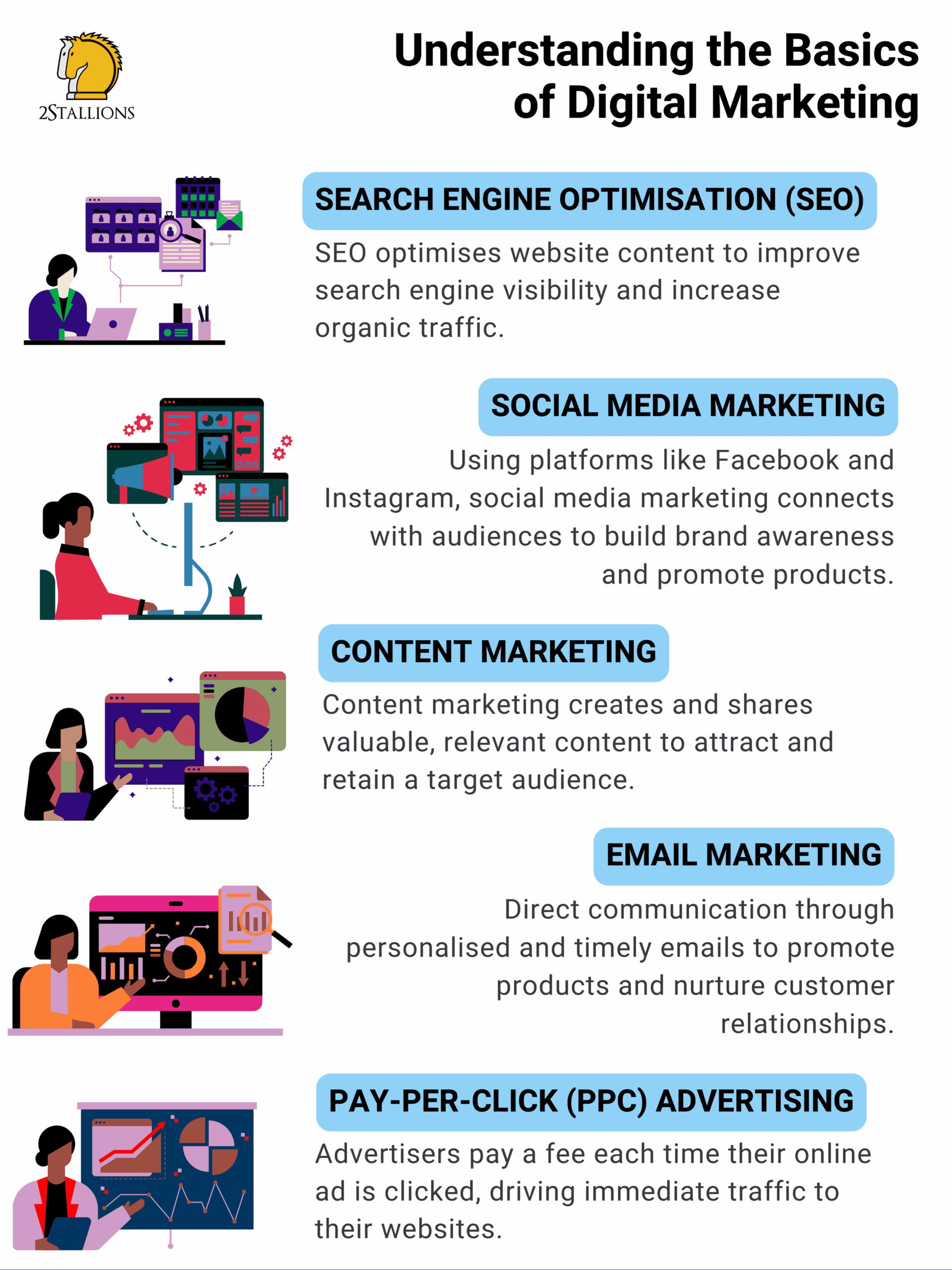
The Basics of Digital Marketing
Digital marketing has become an essential component of any successful business strategy in today’s digital age. Understanding the basics of digital marketing is crucial for reaching and engaging with your target audience effectively. Let’s explore some fundamental concepts:
Website Optimisation
Your website is often the first point of contact between your business and potential customers. Ensure that your website is user-friendly, mobile-responsive, and optimised for search engines to improve visibility and user experience.
Search Engine Optimisation (SEO)
SEO involves optimising your website to rank higher in search engine results pages (SERPs). By using relevant keywords, creating high-quality content, and building backlinks, you can increase organic traffic to your site.
Pay-Per-Click Advertising (PPC)
PPC advertising allows you to display ads on search engines and pay only when a user clicks on them. This method can drive targeted traffic to your website quickly and effectively, complementing your SEO efforts.
Social Media Marketing
Social media platforms provide a powerful channel for engaging with your audience, building brand awareness, and driving traffic to your website. Create compelling content tailored to each platform to maximise engagement.
Email Marketing
Email marketing remains one of the most cost-effective ways to nurture leads and convert them into customers. Personalise your email campaigns, segment your audience, and provide valuable content to build strong relationships with subscribers.
Analytics and Reporting
Measuring the performance of your digital marketing efforts is essential for making informed decisions and optimising your strategies. Utilise tools like Google Analytics to track key metrics such as website traffic, conversion rates, and ROI.
By mastering these basic principles of digital marketing, you can create a solid foundation for growing your online presence, attracting new customers, and achieving long-term success in the digital landscape.
Five Key Advantages of Basic Digital Marketing: Enhancing Visibility, Cost Efficiency, Targeted Reach, Measurable Outcomes, and Real-Time Adaptability
- Increased brand visibility and awareness
- Cost-effective compared to traditional marketing methods
- Targeted reach to specific audience segments
- Measurable results for tracking performance
- Ability to adapt and refine strategies in real-time
Challenges of Basic Digital Marketing: Investment, Competition, and More
- Initial investment
- High competition
- Continuous changes
- Technical expertise needed
- Data privacy concerns
- Negative feedback amplification
Increased brand visibility and awareness
Increased brand visibility and awareness is a key advantage of basic digital marketing strategies. By optimising your website for search engines, running targeted PPC campaigns, and engaging with your audience on social media platforms, you can enhance your brand’s online presence and reach a wider audience. Consistent and strategic digital marketing efforts help to boost brand recognition, establish credibility, and stay top-of-mind with potential customers, ultimately driving more traffic to your website and increasing opportunities for conversions.
Cost-effective compared to traditional marketing methods
One significant advantage of basic digital marketing is its cost-effectiveness when compared to traditional marketing methods. Digital channels offer businesses the opportunity to reach a wider audience at a fraction of the cost associated with traditional advertising mediums such as print or television. With targeted online campaigns, businesses can allocate their budget more efficiently, track performance in real-time, and adjust strategies as needed to maximise return on investment. This affordability aspect makes digital marketing an attractive option for businesses of all sizes looking to achieve their marketing goals without breaking the bank.
Targeted reach to specific audience segments
One notable advantage of basic digital marketing is its ability to achieve targeted reach to specific audience segments. By utilising tools such as social media targeting, PPC advertising, and email segmentation, businesses can tailor their marketing efforts to reach the right audience with relevant content. This precision targeting not only increases the effectiveness of campaigns but also enhances engagement and conversion rates by delivering messages that resonate with specific customer segments. Ultimately, targeted reach enables businesses to maximise their marketing budget by focusing on reaching those most likely to be interested in their products or services.
Measurable results for tracking performance
One significant advantage of basic digital marketing is the ability to obtain measurable results for tracking performance. Through tools like Google Analytics, businesses can monitor key metrics such as website traffic, conversion rates, and engagement levels. This data-driven approach allows marketers to assess the effectiveness of their strategies, identify areas for improvement, and make informed decisions to optimise their digital campaigns. By having access to quantifiable data, businesses can track their progress accurately and adjust their tactics to achieve better outcomes in the ever-evolving online landscape.
Ability to adapt and refine strategies in real-time
One significant advantage of basic digital marketing is its ability to adapt and refine strategies in real-time. Unlike traditional marketing methods, digital marketing allows businesses to monitor campaign performance instantly and make adjustments on the fly. This agility enables marketers to respond promptly to changing market trends, consumer behaviour, and campaign effectiveness, ensuring that their strategies remain relevant and impactful in a dynamic online landscape.
Initial investment
One significant drawback of basic digital marketing is the initial investment it demands. Implementing digital marketing strategies often necessitates an upfront financial commitment towards acquiring tools, software, and launching advertising campaigns. This initial cost can pose a challenge for small businesses or startups with limited budgets, potentially hindering their ability to fully leverage the benefits of digital marketing in reaching their target audience effectively.
High competition
In the realm of basic digital marketing, one significant drawback is the prevalence of high competition. The digital landscape is saturated with businesses vying for the attention of consumers, making it increasingly challenging to distinguish oneself and attract a loyal audience. Standing out amidst fierce competition requires strategic planning, compelling content, and innovative approaches to engage with potential customers effectively. Despite its benefits, the intense rivalry in digital marketing demands continuous adaptation and creativity to carve a niche and thrive in a crowded online environment.
Continuous changes
In the realm of basic digital marketing, one significant drawback lies in the continuous changes that characterise the landscape. Trends shift swiftly, and algorithms undergo frequent updates, demanding vigilant monitoring and swift adaptation of strategies. This perpetual state of flux can pose a challenge for businesses aiming to stay ahead in the digital realm, necessitating ongoing education and flexibility to navigate the ever-evolving terrain of digital marketing effectively.
Technical expertise needed
One significant drawback of basic digital marketing is the requirement for technical expertise. Delving into areas such as SEO, PPC, analytics tools, and various social media platforms often necessitates a deep understanding of technical concepts. Without the necessary knowledge or experience, navigating these aspects of digital marketing can be daunting. In many cases, businesses may need to invest in hiring specialists or outsourcing these tasks to ensure optimal performance and results. The technical complexity involved can pose a challenge for those new to digital marketing, highlighting the importance of continuous learning and potentially seeking professional assistance in this field.
Data privacy concerns
In the realm of basic digital marketing, one significant con that cannot be overlooked is the issue of data privacy concerns. The practice of collecting and utilising customer data for targeted marketing purposes can give rise to ethical dilemmas and privacy apprehensions among consumers. The potential misuse or mishandling of personal information may erode trust and tarnish brand reputation, highlighting the delicate balance that marketers must strike between effective targeting and respecting individual privacy rights. Addressing these concerns through transparent data practices and stringent privacy policies is paramount to maintaining consumer trust in the digital landscape.
Negative feedback amplification
Negative feedback amplification is a significant con of basic digital marketing. In today’s interconnected digital landscape, negative reviews or comments have the potential to rapidly escalate and reach a wide audience through various online channels. If not addressed promptly and effectively, this can severely impact a brand’s reputation and credibility. It is crucial for businesses to have robust strategies in place to manage and mitigate negative feedback to prevent it from overshadowing their positive attributes and undermining customer trust.